
Consumers don’t buy a product or service right away. They take some important steps before making that final decision, which a website sales funnel illustrates.
A typical sales funnel has four stages: awareness, interest, decision, and action. However, some companies build one with more phases included. Regardless of how many stages it encompasses, a sales funnel helps you understand customer behaviors throughout their journey and identify and choose the most effective ways to attract and convert leads.
If you want more conversions and sales, here’s how to achieve both with a well-optimized sales funnel website.
Identify Your Customer’s Pain Points
When building your sales funnel, start by taking a comprehensive look at your ideal customer. This will help you learn about their problems, expectations, interests, and other key information about customer behavior. More insights mean more compelling offers that will win you customers.
Define Your Goals
Once you’ve thoroughly researched your target audience, it’s time to define your goals. Is your sales funnel designed to generate more leads, product demos, e-newsletter signups, or purchases? With clear goals, you can easily measure results and improve performance.
Attract Prospects with an Initial Offer
You’ve gained insights about your ideal customer and set defined, measurable goals for your sales funnel. Now, you’ll need to convince prospects to take your offer.
Around 96% of website visitors aren’t ready to buy, though. To increase your conversions, think about what would grab everyone’s attention. You can attract prospects through educational blog posts, targeted ads, and a substantial social media presence. Share invaluable infographics, create helpful and engaging videos, and write content in your brand’s tone and voice to stand out and entice your target audience.
Build a Landing Page
Unlike the other pages on your website, a landing page aims to sell your offer. (Plus, it’s key to a well-optimized sales funnel.) Winning landing pages highlight the following elements:
Your Unique Selling Proposition
A unique selling proposition, or USP for short, explains the benefit of your offer in one sentence. You can have one USP as your headline and write another sentence under it. Ensure each USP follows this format to keep visitors engaged.
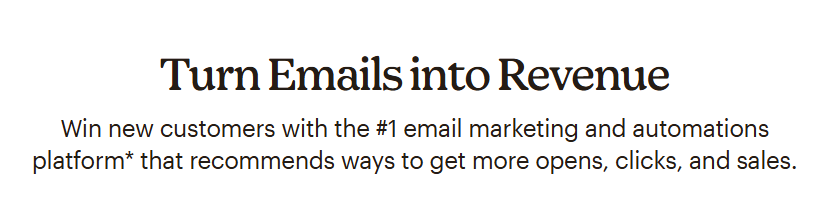
Mailchimp’s USP tells prospects that using the platform helps them generate revenue with engaging emails. It also highlights the brand’s status as a leading Email Development tool and demonstrates how people can utilize Mailchimp to execute successful Email Development campaigns.
The Hero Shot
If you’re selling a product, you can add a hero shot (a single image or video) to show how it’s used.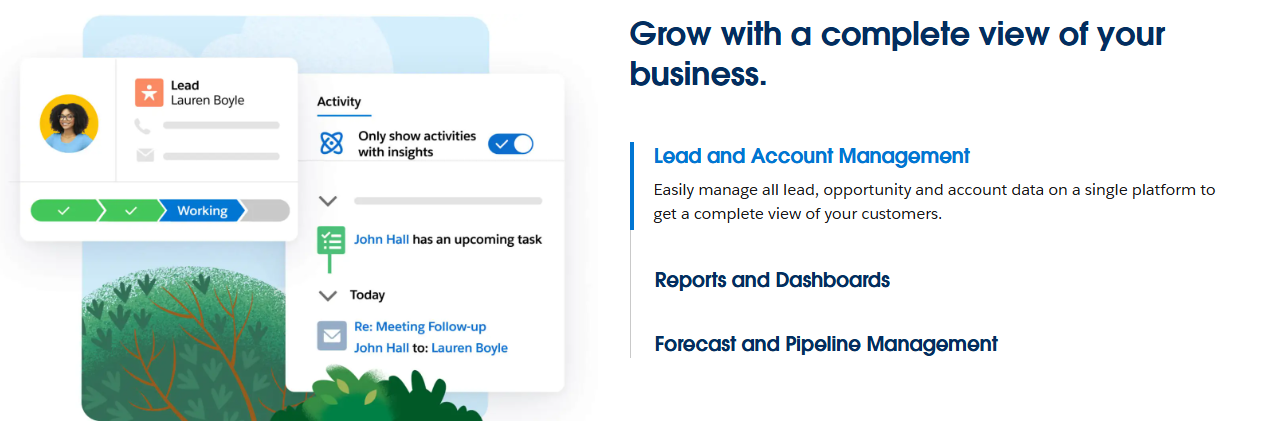
Salesforce’s product page for its sales software features a hero shot of each, accompanied by a brief description. This way, customers can see how the product works instead of having to figure everything out when using it.
Advantages
The most successful landing pages also explain why prospects should choose a product or service over its competitors.
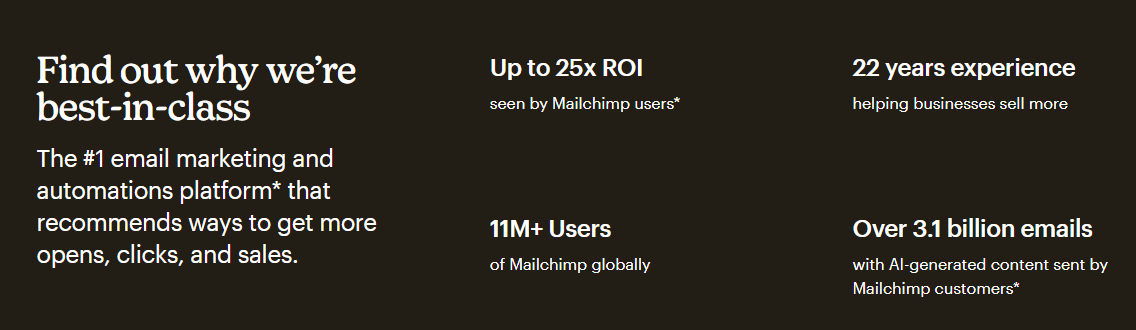
Let’s take another example from Mailchimp. The brand’s homepage highlights some advantages of using its platform, including a huge ROI (return on investment) and extensive Email Development experience.
Emotions influence a consumer’s purchasing decisions more than the features. Knowing how useful your offer is can convince your ideal customer to take it. Therefore, you should list the advantages before the features.
Social Proof
Many landing pages also show social proof to build trust with prospects. Common examples include customer testimonials and awards you’ve won. Overall, social proof demonstrates to site visitors that you can assist them in solving their problems, thereby increasing your leads and conversions.
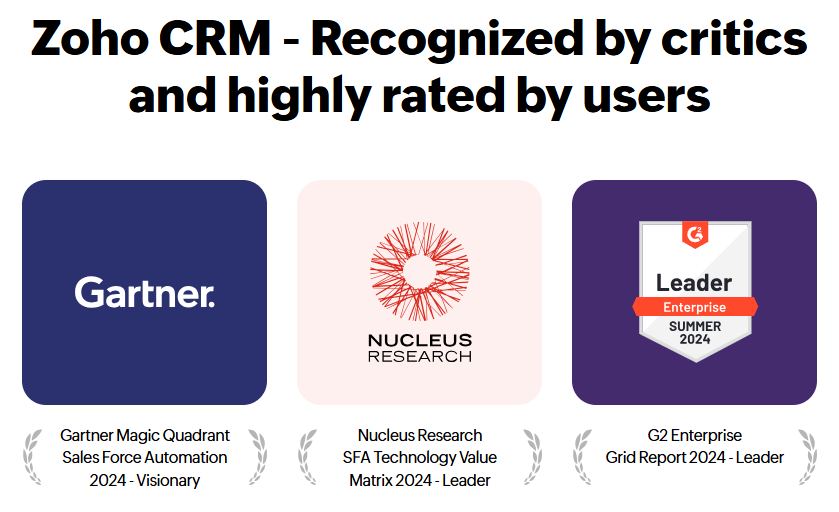
One of Zoho CRM’s landing pages uses awards as social proof. This makes the brand appear credible and trustworthy to consumers.
A Strong CTA (Call to Action)
Finally, you’ll need an effective CTA for your landing page. Conversions happen once it’s clicked.
Your CTA should be big and clear. For the text, consider writing something like “Buy Now” or a brand-specific, yet straightforward call-to-action (CTA). Also, a CTA’s size and colors are as important as the copy itself. Make sure prospects can see your CTA on the device they’re using, and use contrasting colors: one color for the button and another for the text.
Identify & Nurture Qualified Leads
Sales funnels typically capture interested leads who meet a brand’s criteria for its ideal customer. However, HubSpot notes that nearly 20% of sales teams find generating high-quality leads to be challenging.
One excellent way to identify qualified leads is to establish specific criteria and contact the right people. You can do this by grouping leads into particular categories. For example, leads can be categorized into those acquired in-house and those generated through third-party efforts.
Next, create and use a lead-scoring system to determine the leads you should target. Score each lead based on its characteristics, behaviors, and engagement levels. The higher a lead’s score, the more likely they’ll convert.
How to Nurture Qualified Leads
When generating qualified leads, you’d want to keep them interested in your offer. Increase your chances of conversions with these lead-nurturing strategies.
- Send prospecting emails, particularly if you’re offering new offers or discounts. Sending one to two emails weekly should sustain each lead’s interest without annoying them.
- Try cross-selling. This strategy can help qualified leads purchase your product or service and consider additional offers.
- Use other channels and methods. Social media or paid retargeting can help you nurture your qualified leads.
- Message each lead personally.
Keep Reaching Out to Leads & Customers
Your website’s sales funnel can give you new customers or fail to convert leads. If any of these scenarios arise, continue to contact your prospects and customers.
Frequent follow-up emails and offers lead to improved customer retention and increased sales engagement. Conversely, you can increase your lead-nurturing efforts and contact prospects every few months. It’s reported that, on average, brands close sales 29% of the time. Your lead-nurturing strategy can eventually move leads to the end of your sales funnel.
Optimize Your Sales Funnel
Sometimes, the most qualified leads don’t convert at all. By uncovering blind spots, missed opportunities, and potential areas for improvement, you ensure that your sales funnel effectively converts prospects into customers. This sits at the core of continuous sales funnel optimization.
Here’s how to optimize your sales funnel for more conversions:
- See where you lose the most leads. More specific and personalized content is most effective in converting leads at the bottom of your sales funnel.
- Conduct A/B tests. This way, you’ll know what works and needs improvement.
- Create additional content that’s accessible to prospects. Your open-access content should be as informative as your gated content.
In addition to these strategies, we’ve shared more effective ways to improve sales funnels on our blog.
Build a Strong Sales Funnel for More Conversions
With your ideal customer buying products and services online, you need a well-optimized sales funnel to attract and convert them. Building one involves several important steps, from a closer look at customer behavior to consistent optimization. This process helps your business drive revenue and achieve significant growth.
Ready to take one step closer to more conversions and sales? Work with Devwerkz to create winning sales funnels or gain more expert tips from our blog.
 View our Solutions